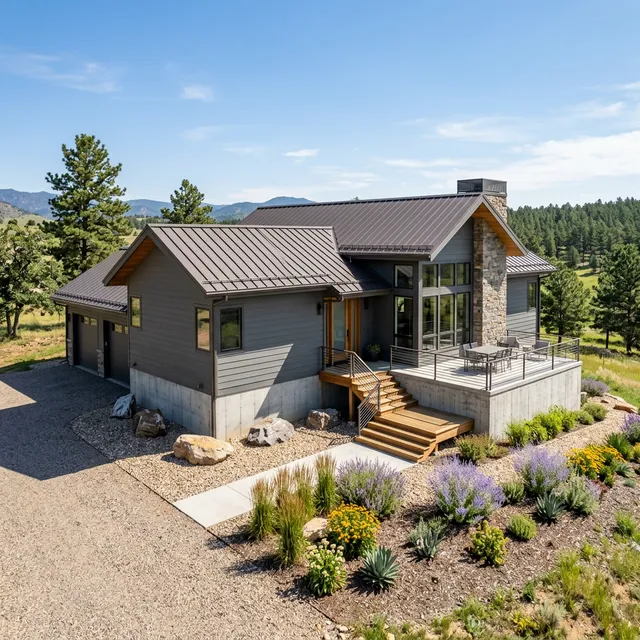
Fireproofing your property: reducing wildfire risk around your home
Quick takeaways
- Start close to the house. FireSmart guidance emphasizes that changes within the first 10 metres of your home have the greatest impact on reducing wildfire risk[1] [2].
- Create a non‑combustible zone. Maintain a 1.5‑metre fire‑resistant zone around your home and attached structures, free of combustible materials like mulch, firewood and patio furniture.
- Prune and space trees. Prune lower branches up to 2 metres and space trees at least 3 metres apart to reduce the intensity of a wildfire.
- Maintain roofs and gutters. Regularly clear leaves, needles and debris from roofs and gutters and consider installing gutter guards.
- Upgrade materials. Fire‑resistant roofing (metal, asphalt or composite), tempered double‑pane windows and non‑combustible siding reduce ignition risk.
- Manage attachments. Wooden fences, decks and sheds can act as fire pathways; separate them with metal gates or fire‑resistant material and clear vegetation along fence lines.
Who This Is For / When This Matters in Canada
Homeowners and tenants across Canada can benefit from fireproofing measures, but those living in or near wildland–urban interfaces (e.g., British Columbia’s interior, Alberta’s foothills, northern Ontario and Quebec) face the highest risk. Spring through fall is the prime time to implement outdoor improvements when snow has melted and plants are growing. During winter, you can plan projects, hire contractors and purchase materials for the coming season.
Step-by-Step Plan to Reduce Wildfire Risk
- Zone Assessment: Divide your property into three zones: Zone 0 (0–1.5 m) – the non‑combustible zone; Zone 1 (1.5–10 m) – the yard; Zone 2 (10–30 m) – the outer yard or fields. Start with Zone 0 and progress outward.
- Non‑combustible Zone (0–1.5 m): Remove all combustible materials; use stone or gravel landscaping. Check that siding and stucco are intact. Install spark arrestors on chimneys and screen vents with 3 mm metal mesh.
- Zone 1 (1.5–10 m): Prune trees, remove deadfall and space plants; maintain green lawns. Store firewood, propane tanks and other fuel sources at least 10 m from the house.
- Zone 2 (10–30 m): Thin and prune evergreen trees, create breaks in vegetation and remove continuous fuel ladders. Maintain access routes for firefighters.
- Structural Upgrades: When replacing roof or siding, choose fire‑resistant materials; consider replacing open eaves with soffit and fascia to prevent ember entry. Install tempered windows and fire‑rated doors.
- Maintain: Schedule biannual clean‑ups (spring and fall) to remove debris, inspect vents and gutters, and verify that water sources and tools are ready.
Decision Points
- Detached home vs. townhouse/apartment: Townhomes may share walls and roofs; work with neighbours and property managers to implement FireSmart measures. Apartment residents should focus on balcony safety (removing combustibles) and advocating for building maintenance.
- Urban vs. rural: Rural properties often have larger yards and forested areas; invest in water pumps, sprinklers and stand‑alone generators to maintain water pressure. Urban dwellers should ensure accessible lanes and coordinate with neighbours to reduce vegetation.
- New builds vs. retrofits: New construction offers the best opportunity to incorporate fire‑resistant materials and design features such as non‑combustible exteriors and setback distances. For existing homes, prioritize replacing roofs and improving vents over aesthetic upgrades.
- Budget considerations: Start with low‑cost tasks (pruning, moving flammable items). Plan for major upgrades like roofing when existing materials need replacement.
What to Do Today, This Week, and This Season
Today
- Walk around your property and identify combustible items within 1.5 metres of your home—planters, doormats, wooden benches, firewood and propane tanks. Move them away or replace them with non‑combustible alternatives.
- Trim vegetation touching or overhanging your house; remove vines and climbing plants that could act as ladders for fire.
- Clean leaves and needles from your roof and gutters.
- Check chimney and dryer vents; ensure screens are intact and free of debris.
This Week
- Establish a 1.5‑metre non‑combustible zone. Replace flammable mulch with gravel, stone or pavers around the perimeter of your home.
- Prune and thin vegetation. Prune tree branches up to 2 metres above the ground and space trees at least 3 metres apart. Remove dead shrubs and underbrush.
- Install gutter guards and vent screens. Metal mesh screens on gutters and vents reduce debris accumulation and prevent embers from entering.
- Create a yard maintenance schedule. Plan to mow grass regularly (to about 10 cm) and clear dead material throughout the fire season.
This Season
- Upgrade exterior materials. When re‑roofing or renovating, choose Class A fire‑rated roofing (metal, asphalt, clay tile or composite) and non‑combustible siding such as stucco, fibre cement or brick.
- Replace single‑pane windows. Install tempered, double‑pane windows to improve heat resistance and reduce breakage during a fire.
- Address decks and attachments. Enclose the underside of decks and balconies with fire‑resistant sheathing and maintain a non‑combustible surface underneath. Separate wooden fences from your home with a metal gate or section of non‑combustible material.
- Install exterior water sources. Set up hoses on all sides of your home that are long enough to reach all areas; consider a water pump or sprinkler system for rural properties.
Product Families Recommended
Fire‑resistant Roofing and Siding Materials
Why it helps: Class A fire‑rated roofing and non‑combustible siding resist ignition from embers and radiant heat[3] [4].
What to look for: Roofing materials such as metal, asphalt shingles, clay or composite tiles that are rated Class A. Siding materials such as stucco, fibre cement, brick or metal. Certification labels (ULC, CSA) and compliance with local building codes.
Good / Better / Best:
- Good: Asphalt shingles with Class A rating.
- Better: Metal or fibre‑cement panels.
- Best: Clay tile or composite slate with high fire resistance and long lifespan.
Non‑combustible Landscaping Materials
Why it helps: Materials such as gravel, rock and pavers do not burn and help create a firebreak around your home.
What to look for: Washed gravel, crushed stone, brick or concrete pavers. Mulches labelled non‑flammable or recycled glass mulch. Compatibility with your climate and aesthetics.
Good / Better / Best:
- Good: Basic pea gravel or crushed rock.
- Better: Interlocking paving stones or flagstone pathways.
- Best: Decorative rock or glass mulch combined with permeable paver systems.
Fire‑resistant Plants and Ground Cover
Why it helps: Certain plants have high moisture content and low resin, making them less likely to ignite; they can reduce the spread of fire through your yard[5] [6].
What to look for: Local native species known for fire resistance (e.g., deciduous shrubs, low‑growing perennials). Plants with broad leaves and high water content (e.g., hosta, columbine). Avoid highly flammable species like cedar, juniper and coniferous shrubs near the house.
Good / Better / Best:
- Good: Deciduous ground covers such as creeping thyme or sedum.
- Better: Native fire‑resistant shrubs like Saskatoon berry or currant.
- Best: Landscaped beds combining low‑flammability plants with rock mulch and drip irrigation.
Gutter Guards and Vent Screens
Why it helps: Mesh guards keep leaves and needles out of gutters, reducing fuel accumulation; vent screens prevent embers from entering attics.
What to look for: Metal mesh guards that fit your gutter profile. Vent screens with 3 mm wire mesh for attic, crawl space and dryer vents. Corrosion‑resistant materials (stainless steel or aluminium).
Good / Better / Best:
- Good: Plastic gutter mesh and basic vent screen kits.
- Better: Stainless‑steel micro‑mesh guards and aluminium vent covers.
- Best: Integrated gutter guard systems with covers and downspout filters plus professionally installed vent screens.
Water Pumps and Sprinkler Systems
Why it helps: Having an independent water source enables you to wet roofs, decks and surrounding vegetation when a fire is approaching; sprinklers can deter ember ignition[7].
What to look for: Gas‑powered or battery‑powered water pumps capable of drawing from tanks, pools or ponds. Exterior sprinkler heads designed for roof and yard coverage. Hoses rated for high pressure and long lengths.
Good / Better / Best:
- Good: Portable high‑pressure pump and a hose kit.
- Better: Permanent rooftop sprinkler system connected to water storage.
- Best: Automatic exterior sprinkler system integrated with home automation and powered by backup generator.
Firefighting Tools (Rakes, Shovels, Hoses)
Why it helps: Simple hand tools and garden hoses allow you to extinguish small spot fires and remove fuel around your home.
What to look for: Metal rakes and shovels with long handles and durable construction. Garden hoses long enough to reach all sides of your house. Fire‑rated hose nozzles with adjustable spray patterns.
Good / Better / Best:
- Good: Basic steel rake, shovel and 30‑m hose.
- Better: Fire‑fighter style shovel (Pulaski) and heavy‑duty hose with brass nozzle.
- Best: Full wildland firefighting tool kit with McLeod rake, Pulaski, backpack pump and fire hose attachments.
Spark Arrestors and Chimney Screens
Why it helps: Spark arrestors on chimneys reduce the chance of your fireplace sending embers into the air, while screens keep embers from entering your home.
What to look for: UL‑listed or CSA‑approved spark arrestor caps sized to fit your chimney. Stainless‑steel or galvanised wire mesh with openings no larger than 3 mm[8] [9]. Weatherproof construction and secure mounting hardware.
Good / Better / Best:
- Good: Basic chimney cap with mesh screen.
- Better: Heavy‑duty spark arrestor with integrated rain shield.
- Best: Professionally installed multi‑flue cap with bird guard and spark arrestor.
Fire Extinguishers and Garden Hoses
Why it helps: Portable fire extinguishers allow you to tackle small fires before they spread; hoses provide continuous water supply.
What to look for: ABC‑rated extinguishers suitable for wood, paper, liquids and electrical fires. Extinguishers sized for home use (2.5–5 lb) and stored on each floor[10] [11]. Hoses that reach all areas of the property and nozzles with spray/jet settings.
Good / Better / Best:
- Good: One 2.5‑lb extinguisher and basic garden hose.
- Better: Multiple extinguishers (5 lb each) and heavy‑duty rubber hose with adjustable nozzle.
- Best: Fire extinguishers with pressure gauges and wall mounts plus fire‑rated hose bib connection and nozzle.
Checklists
Home Wildfire Risk‑Reduction Checklist
- Remove combustible materials within 1.5 m of home (mulch, planters, firewood)
- Replace flammable mulch with gravel or stone around foundation
- Prune tree branches up to 2 m and space trees at least 3 m apart
- Mow grass to about 10 cm and clear dead vegetation
- Install mesh screens on vents and gutters
- Clean roof and gutters twice a year and after storms[12]
- Store firewood and propane tanks at least 10 m from structures
- Separate wooden fences from house with metal gate
- Upgrade roofing and siding to fire‑resistant materials when renovating
- Install tempered double‑pane windows and fire‑rated doors
- Keep hoses and tools accessible on all sides of home
Common Mistakes and Myths
- “Cedar trees are beautiful—why remove them?” Many ornamental evergreens contain resins and oils that ignite easily; replace them with deciduous species or plant them farther from structures.
- “Wood mulch is fine near the house.” Wood chips and bark can smoulder and ignite under embers; use non‑combustible materials like gravel around the foundation.
- “My lawn is green, so it’s safe.” Long or dry grass can carry fire; maintain grass around 10 cm and water regularly during drought.
- “I have a metal roof, so I’m fully protected.” Embers can enter through vents, soffits or gaps in siding; comprehensive measures are necessary.
- “Fireproofing is too expensive.” Many tasks (moving combustibles, pruning, cleaning gutters) are low‑cost or free and significantly reduce risk.
When to Escalate
- Hire certified arborists to remove large trees or limbs near power lines or structures.
- Contact a roofing contractor when upgrading to fire‑resistant materials; ensure compliance with local codes.
- If you live on a steep slope or in a high‑risk area, consult FireSmart professionals for property assessment and recommendations.
- During an active fire, prioritize evacuation; do not attempt to defend your property if authorities advise leaving.
Sources
- Fire behaviour - Natural Resources Canada
- Forest fires - Natural Resources Canada
- Fire Ratings for Roofing Material – Surviving Wildfire
- Fire Safe Marin - Adapt to Wildfire — Fire-Resistant Roofs - Fire Safe Marin
- Office of Engagement and Extension — Top 10 fire-resistant native plants for Colorado landscaping | Office of Engagement and Extension | Colorado State University
- OSU Extension Service — Fire-resistant plants for home landscapes | OSU Extension Service
- Fire Safe Marin - Adapt to Wildfire — Exterior Sprinkler Systems - Fire Safe Marin
- International Code Council (ICC) — Digital Codes
- National Fire Code of Canada 2020 - National Research Council Canada
- Transport Canada — Tier I - Policy – Acceptable standards and equivalencies for portable fire extinguishers required on Canadian vessels
- BRK Fire Extinguisher ABC Rating Guide
- Resiliency measures to protect your home - Natural Resources Canada