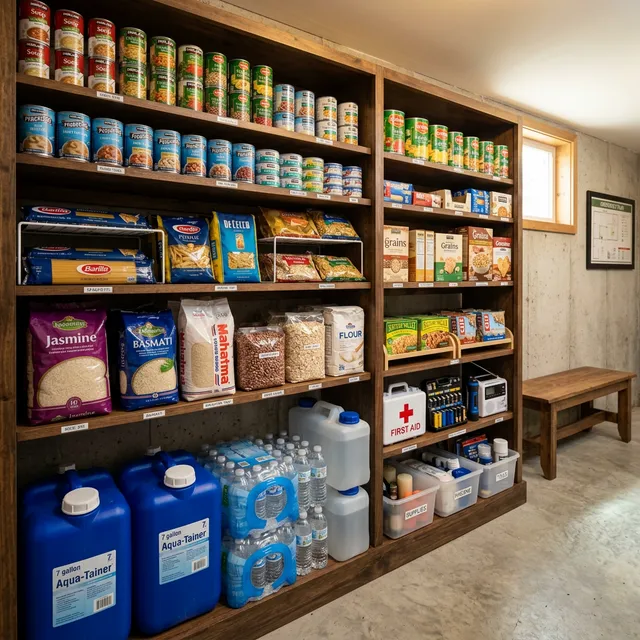
Emergency Pantry Planning
Quick Takeaways
- Build self-sufficiency for at least 72 hours. A common baseline is 1 gallon of water per person per day (about 3.8 L) for drinking and basic hygiene[1] [2].
- Stock shelf-stable foods you actually eat, such as canned beans, rice, pasta, fruits and vegetables, nut butters, and energy bars, which can last months if stored properly.
- Store food high off the floor in watertight containers to protect it from floodwaters.
- Keep a manual can opener and hand tools, and rely on foods that don’t require refrigeration or electricity during outages.
- Rotate supplies using a first-in-first-out system so nothing spoils, and check expiry dates regularly.
- Include special items for infants, pets, and medical needs, adjusting water and food quantities accordingly.
- Keep basic emergency-kit essentials nearby (flashlight, battery/hand-crank radio—NOAA Weather Radio if possible, first aid kit, copies of key documents)[7].
Who Needs an Emergency Pantry?
An emergency pantry helps households weather supply disruptions caused by storms, wildfires, floods, major winter weather, infrastructure failures, labor disruptions, or pandemics. Rural communities that may be cut off by road closures, areas prone to hurricanes or tornadoes, and families in apartments that rely on elevators are all vulnerable when grocery shelves empty. Localized disasters can interrupt deliveries or cause power outages, making it harder to cook or buy food. Planning a pantry ensures that families, roommates, and students have enough nutritious food and water to manage for days or weeks without panic buying.
Key Risks and Realities of Food Shortages
Food shortages are often short-lived, but extreme weather and infrastructure failures can quickly empty store shelves. Public agencies commonly recommend being self-sufficient for at least three days. Water systems can be contaminated or shut down during floods and boil-water notices. Power outages may last hours or days; a full freezer stays frozen for about 48 hours and a half-full freezer for 24 hours, while an unopened fridge stays cold for about four hours[3] [4]. Building a pantry isn’t hoarding – it’s about gradually accumulating and rotating foods so you’re ready without wasting money. Over-buying foods you don’t like, storing tins in damp basements, or forgetting to include a can opener are common mistakes[3] [4].
What to Do Today to Start Your Emergency Pantry
- Take inventory of what you already have. Check “best by” dates and identify shelf-stable items like beans, pasta, canned fish, and vegetables. Note any dietary restrictions or allergies.
- Calculate water needs: plan for at least 1 gallon per person per day (drinking + basic hygiene), and add more if you expect high heat, heavy activity, or extra cooking/cleaning needs[1] [2]. Don’t forget pets, who need their own water supply.
- Purchase a manual can opener, basic utensils, and a small selection of no-cook foods (energy bars, peanut butter, dried fruit).
- Choose a storage location that is cool, dry, and high enough to avoid potential flooding; avoid garages or hot attics.
What to Do This Week to Build a 72-Hour Supply
- Start building a 72-hour supply of non-perishable foods. Aim for a balance of carbohydrates, protein, and fats (e.g., rice, pasta, canned beans, tuna, nut butters, shelf-stable milk).
- Acquire water storage containers or jugs. Clean containers thoroughly and fill them with tap water if you’re on a safe municipal supply, or purchase bottled water. Label with the date and replace on a regular schedule (commonly every six months for stored tap water)[1].
- Invest in airtight storage bins and shelving to organize your pantry. Use smaller containers for staples like flour or oats to deter pests.
- Create a rotation system. Label items with the purchase or “best by” date and place newer items behind older ones. Plan meals that use the oldest items first.
- Include special supplies: formula and baby food, pet food, extra medications, allergy-friendly foods, and comfort items like tea or chocolate.
What to Do This Season to Expand Your Pantry
- Expand to a 1–2 week supply during slower seasons when sales are plentiful. Gradually add canned meats, shelf-stable vegetables, and dried fruit to diversify your diet.
- Review and rotate your stock at least twice a year. Check dates, replace any items nearing their “best by” date, and donate surplus to food banks.
- Refresh your water: replace stored water on a regular schedule, and add a few extra jugs ahead of seasonal storms or planned utility work[1] [5].
- Practice cooking with pantry ingredients. Experiment with simple recipes so you’re comfortable preparing meals without fresh produce or electricity. Keep recipe cards or a printed cookbook in your pantry.
- Update your plan for any new household members, dietary changes, or medical needs. Adjust quantities before hurricane season, wildfire season, or winter storms.
Complete Plan for Building and Maintaining an Emergency Pantry
- Assess household needs: Count people and pets, note dietary restrictions, and estimate how many days you want to be self-sufficient. Consider that children, pregnant people, and those with medical conditions may need extra calories or fluids.
- Select foods: Choose a variety of shelf-stable items you enjoy. Prioritize canned beans, fish, meat, and vegetables; dried grains and pasta; nut or seed butters; dehydrated meals; shelf-stable milk alternatives; and energy bars. Include foods requiring little or no cooking for power-outage situations.
- Calculate water: Stock at least 1 gallon per person per day (drinking + basic hygiene), and add more if your situation requires extra cooking, cleaning, hot-weather hydration, or medical needs[1] [2]. Store extra water for pets and infants. If space is limited, include water purification tablets or filters.
- Storage and organization: Use sealed bins, can racks, or shelves to keep food off the floor and away from moisture. Label and date each item, grouping similar foods together. Keep a list or inventory spreadsheet to track quantities and expiry dates.
- Rotation and replenishment: Follow the “first in, first out” rule. Incorporate pantry items into your regular meals so nothing goes to waste. Replace used items on your next grocery trip and watch for sales to restock.
- Cooking and sanitation: Have a manual can opener, basic cookware, and utensils. Consider a portable stove or grill (used outdoors only and according to manufacturer instructions) as backup cooking. Maintain hygiene by washing hands and surfaces; discard any food that may have contacted floodwater or shows an unusual odor[8].
- Contingencies: Plan for power outages. Know that a full freezer remains frozen for about 48 hours and a half-full one for 24 hours; an unopened refrigerator stays cold for about four hours[4] [9]. Eat perishable foods first, then rely on your pantry.
- Decision points: Apartment dwellers with limited space may prioritize compact, high-calorie foods and collapsible water containers. Households on well water may need purification systems. Households with seniors or infants should stock appropriate foods and more water. Adjust the quantity of shelf-stable supplies to suit your climate and local hazards.
Recommended Product Families for an Emergency Pantry
Water Storage Containers
- Why it helps: Secure water storage prevents dehydration and gives you reserves for cooking and hygiene when municipal systems fail or are contaminated.
-
What to look for:
- BPA-free plastic or food-grade materials
- Handles and spouts for easy pouring
- Stackable or modular designs to save space
- Light-blocking material to reduce algae growth
- Good / Better / Best: A good option is a set of 1-gallon jugs (about 4 L) you refill from the tap. Better options include rugged 5-gallon (about 20 L) containers with built-in spigots. The best systems are modular “water bricks” or collapsible tanks that stack securely and include spigots for dispensing.
- Affiliate links: [Affiliate link: Water storage containers – option A] [Affiliate link: Water storage containers – option B] [Affiliate link: Water storage containers – option C]
Shelf-Stable Food Staples
- Why it helps: Non-perishable foods ensure a balanced diet during disruptions and can form the basis of hearty meals without refrigeration.
-
What to look for:
- Long shelf life (6–24 months)
- Nutritional balance (protein, carbohydrates, fats)
- Low sodium and added sugar
- Easy to prepare (no or minimal cooking)
- Packaging that withstands humidity and pests
- Good / Better / Best: Good staples include canned soups, tuna, and beans. Better supplies add dried grains, shelf-stable milk, and nut butters. The best kits combine dehydrated meals, freeze-dried fruits, and emergency ration bars with a 5- to 25-year life.
- Affiliate links: [Affiliate link: Shelf-stable food staples – option A] [Affiliate link: Shelf-stable food staples – option B] [Affiliate link: Shelf-stable food staples – option C]
Airtight Storage Bins and Pantry Shelves
- Why it helps: Airtight containers and sturdy shelving keep food dry and organized, protecting against pests, mold, and floodwater.
-
What to look for:
- Sealed lids with silicone gaskets
- Clear sides or labels to see contents
- Food-grade plastic or metal construction
- Stackability and adjustable shelving to fit different containers
- Good / Better / Best: Basic plastic bins with snap-on lids work well for dry goods. Better sets include modular containers with locking mechanisms and matching shelves. The best options are heavy-duty steel shelving paired with BPA-free bins or glass jars and oxygen absorbers for long-term storage.
- Affiliate links: [Affiliate link: Airtight storage bins and pantry shelves – option A] [Affiliate link: Airtight storage bins and pantry shelves – option B] [Affiliate link: Airtight storage bins and pantry shelves – option C]
Manual Can Openers
- Why it helps: A reliable manual opener ensures you can access canned foods during power outages or when electric openers are unusable.
-
What to look for:
- Sturdy construction and comfortable grip
- Smooth-edge cutting mechanism to avoid metal slivers
- Built-in bottle opener or jar opener
- Ease of cleaning and rust resistance
- Good / Better / Best: A good opener is a basic stainless-steel handheld model. Better openers include ergonomic grips and safety-cut wheels. The best openers are heavy-duty devices with gear-driven mechanisms, quick-release handles, and multiple functions.
- Affiliate links: [Affiliate link: Manual can openers – option A] [Affiliate link: Manual can openers – option B] [Affiliate link: Manual can openers – option C]
Inventory and Rotation Systems
- Why it helps: Tracking what you have prevents waste and helps you replace items before they expire.
-
What to look for:
- Simple labeling (sticky notes, whiteboard, chalk labels) or digital apps
- Easy-to-read date markers
- Ability to track quantities and plan meals
- Durability if using physical boards or labels in damp basements
- Good / Better / Best: A good system is a simple notebook or spreadsheet. Better solutions include dry-erase boards or chalk labels on containers. The best systems combine digital inventory apps with bar-code scanning and printable labels.
- Affiliate links: [Affiliate link: Inventory and rotation systems – option A] [Affiliate link: Inventory and rotation systems – option B] [Affiliate link: Inventory and rotation systems – option C]
Emergency Cooking Options
- Why it helps: When electricity or gas service is interrupted, a backup stove can help you heat water and prepare shelf-stable foods safely.
-
What to look for:
- Fuel type (propane, butane, alcohol) and local availability
- Stability and wind protection for outdoor use
- Compact size and weight for storage or evacuation
- Safety features like automatic shut-off and flame guards
- Good / Better / Best: A basic option is a single-burner butane stove with disposable cartridges. Better choices include two-burner propane camp stoves with refillable tanks. The best setups pair a high-efficiency stove with integrated cookware and multi-fuel capability.
- Affiliate links: [Affiliate link: Emergency cooking options – option A] [Affiliate link: Emergency cooking options – option B] [Affiliate link: Emergency cooking options – option C]
Water Purification Tablets or Filters
- Why it helps: If bottled water runs out or tap water is unsafe, purification tablets, filters, boiling, or disinfecting with household bleach (when appropriate) can help make water safer to drink[6] [5].
-
What to look for:
- Certification to address bacteria, protozoa, and (if needed) viruses
- Treatment capacity (gallons/liters per tablet or filter)
- Shelf life and storage conditions
- Ease of use (tablets, squeeze filters, pump filters)
- Good / Better / Best: Good products are basic chlorine dioxide tablets. Better options include compact straw filters for personal use. The best systems feature portable pumps or gravity filters that can treat many gallons at once and come with replaceable filter cartridges.
- Affiliate links: [Affiliate link: Water purification tablets or filters – option A] [Affiliate link: Water purification tablets or filters – option B] [Affiliate link: Water purification tablets or filters – option C]
Spice Kits and Nutritional Supplements
- Why it helps: Spices and basic supplements keep meals flavorful and nutritionally complete when fresh produce is scarce.
-
What to look for:
- Durable, compact containers for spices (stackable jars, modular kits)
- Basic vitamins or electrolyte tablets with long shelf lives
- Balanced multivitamins
- Inclusion of comfort foods like tea, hot chocolate or honey
- Good / Better / Best: A good kit includes salt, pepper and a few favorite dried herbs. Better kits offer a variety of herbs and spices in refillable containers plus a multivitamin. The best options bundle a wide spice selection with nutritional supplements, protein powder and electrolyte drink mixes.
- Affiliate links: [Affiliate link: Spice kits and nutritional supplements – option A] [Affiliate link: Spice kits and nutritional supplements – option B] [Affiliate link: Spice kits and nutritional supplements – option C]
Meal Planning Resources
- Why it helps: Recipe cards or guidebooks teach you how to make tasty meals from shelf-stable ingredients and help you rotate your pantry efficiently.
-
What to look for:
- Print or laminated cards for long-term readability
- Simple recipes requiring few fresh ingredients
- Portions scaled for different household sizes
- Guidance on substituting ingredients and adjusting for dietary needs
- Good / Better / Best: Good resources include basic pantry cookbooks or printed recipes. Better resources offer ring-bound guides with meal plans and checklists. The best combine printed and digital content, integrating with inventory apps and offering seasonal meal ideas.
- Affiliate links: [Affiliate link: Meal planning resources – option A] [Affiliate link: Meal planning resources – option B] [Affiliate link: Meal planning resources – option C]
Checklists for Emergency Pantry
72-Hour Pantry Checklist (Per Person)
- Water: 1 gallon per day for drinking + basic hygiene (adjust for pets, infants, illness, hot weather, and extra cooking needs)[1] [2].
- Carbohydrates: at least 6 servings of grains (rice, pasta, oats, crackers) per day.
- Proteins: canned beans, lentils, fish, chicken, nut or seed butters; shelf-stable milk.
- Fruits and vegetables: canned or dried fruits and vegetables, tomato sauce, fruit cups.
- Fats: oils or ghee, canned coconut milk.
- Condiments and spices: salt, pepper, herbs, sugar, honey.
- Comfort foods: tea, coffee, chocolate, instant oatmeal, snacks.
- Special items: baby formula and food, pet food, allergy-friendly options, extra medications, vitamin supplements.
- Tools: manual can opener, utensils, plates, napkins, measuring cups.
- Cooking: portable stove or grill (outdoor use only) with fuel.
- Sanitation: dish soap, disinfectant/bleach products used per label directions, paper towels.
- Documentation: printed recipes, inventory list, emergency phone numbers.
Rotation Checklist
- Every 6 months: replace stored water (or follow your chosen schedule); check dates and use up older foods[1] [10].
- Every season: adjust supplies for seasonal needs (extra calories for winter; more hydration for summer); restock pantry after major sales or harvests.
- After any emergency: re-evaluate what worked, note gaps, and update your plan.
Common Mistakes and Myths
- Myth: You need a year’s worth of food. While some preppers aim for long-term supplies, most households only need a 72-hour to two-week buffer. Focus on realistic goals and rotate regularly[11].
- Stocking foods you don’t eat. Buying cans of beans or exotic rations you’ve never tried leads to waste. Build your pantry around foods your family enjoys.
- Forgetting a can opener or utensils. Manual tools are essential when electricity fails.
- Storing food in damp or hot places. Basements prone to flooding, garages and attics can ruin food. Choose cool, dry locations.
- Neglecting dietary restrictions. Ensure gluten-free, vegan or diabetic-friendly options where required and include additional water or calories for pregnant people, children and pets.
- Never rotating supplies. Even canned goods expire; schedule regular reviews and incorporate older items into meals.
When to Escalate
If you’re down to a few days’ supply, contact neighbors, community organizations or local authorities for assistance. During boil-water notices or contamination events, follow official instructions on boiling, disinfection, or other water treatment steps[5] [6]. Seek medical advice if anyone develops symptoms of dehydration or malnutrition. In extended emergencies, coordinate with local relief efforts and be prepared to relocate if basic needs cannot be met.
Sources
- How to Create an Emergency Water Supply | CDC
- Prepare for a disaster or emergency by packing an emergency supply kit (PDF) | CDC
- No power after the storm? Keep your food safe! | Houston Health Department
- Food and Water Safety During Power Outages and Floods | FDA
- Emergency Disinfection of Drinking Water | U.S. EPA
- Make Water Safe During an Emergency (PDF) | CDC
- Survival Kit Supplies | American Red Cross
- Food Safety in a Disaster or Emergency | FoodSafety.gov
- Avoid Foodborne Illness During Temporary Power Outages | USDA
- Certifying Board for Dietary Managers (CBDM) - Food Storage Guidelines
- Colorado State University Office of Engagement and Extension — CSU Extension at Colorado State University