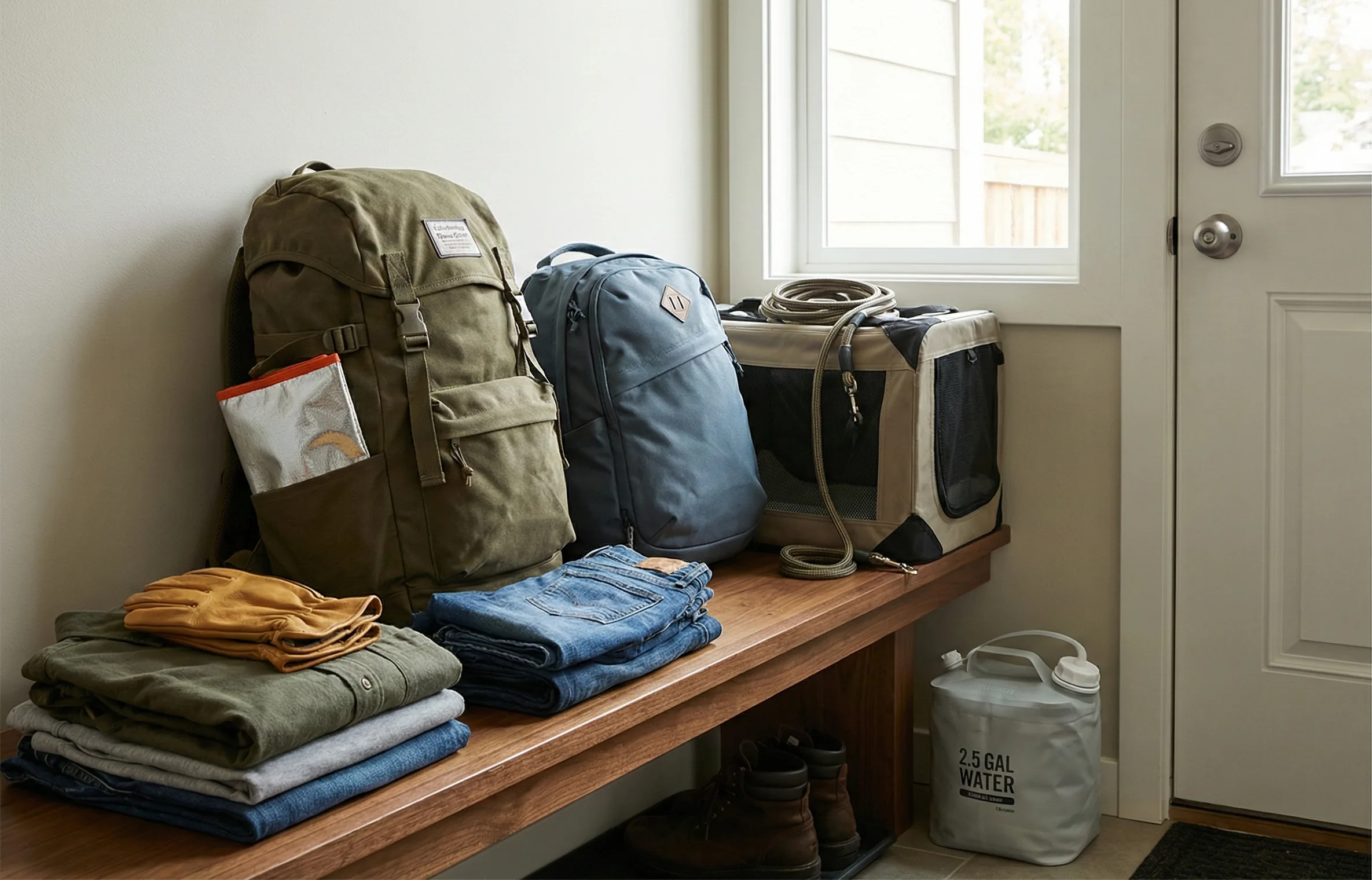
Wildfire evacuation readiness: planning for a quick escape
Quick takeaways
- Evacuate without delay. Leave immediately when an evacuation order is issued; hesitation can risk your safety and that of emergency responders.
- Prepare a grab‑and‑go bag. Include essentials like cash, a portable radio, prescription medications, spare glasses, clothing changes, pet food, flashlights, and batteries.
- Secure utilities before departure. Turn off air conditioning, water, and electricity; close all doors and windows; use duct tape to seal gaps and reduce smoke and ember entry.
- Reduce fire hazards around your home. Clear leaves and debris from roofs and gutters, mow grass, and remove combustible materials within about 30 feet (10 metres) of your property.
- Plan for pets and transportation. Arrange pet carriers and supplies, ensure your vehicle has fuel, and practice evacuation routes.
Who this is for / when this matters
This guide is intended for households in wildfire-prone areas, especially near forests, grasslands, chaparral, or the wildland‑urban interface (WUI). Evacuation orders are issued when fires endanger lives and structures, often rapidly during peak season from May to September. Whether you own a home near the California foothills, live on the edge of a forested area in the Pacific Northwest, rent in the Mountain West, or live in a rural community with limited road access, having a clear plan and ready bag is vital. Detailed planning is particularly beneficial for families with children, seniors, individuals with mobility issues, or pet owners.
Risk and reality check
Wildfires spread swiftly, with embers traveling miles ahead of the main fire. Evacuation orders can come with little warning due to changing conditions or wind shifts. Delaying evacuation can lead to being trapped in traffic or exposed to dense smoke. A go‑bag need not be complex—a simple backpack or duffel with essentials can save critical time. Preparing your home before leaving can minimize damage. While not all properties are defensible, eliminating fuel sources and shutting off utilities lowers ignition risk. Remaining calm and following official routes enhances safety for your household and emergency responders[1] [2].
What to do today / this week / this season
Today
- Develop an evacuation plan. Identify at least two escape routes from your home and neighborhood. Establish meeting points and out‑of‑area contacts.
- Assemble a grab‑and‑go bag. Use a sturdy backpack to store essential supplies (refer to the checklist below). Keep it in an easily accessible spot.
- Verify vehicle readiness. Maintain at least a half‑full fuel tank; consider keeping a spare gas can if you live far from gas stations[3].
- Organize pet preparations. Secure carriers, leashes, and sufficient food and water for each pet. Ensure ID tags and microchip details are current.
This week
- Assign household roles. Determine who will retrieve each child, pet, or item; practice a timed evacuation drill.
- Duplicate important documents. Save digital copies of passports, insurance policies, and medical records in cloud storage and a fireproof safe or waterproof pouch.
- Reduce property flammability. Clear flammable debris from gutters and roofs, mow lawns to under about 4 inches (10 centimetres), remove dead vegetation within about 30 feet (10 metres), and relocate combustible items like furniture, toys, and firewood away from your home.
- Inspect vents and openings. Repair screens on attic and foundation vents; cover any damaged vents with metal or duct tape.
This season
- Review insurance coverage. Confirm that your homeowner or renter insurance includes wildfire damage and assess coverage limits.
- Arrange accommodation options. Identify friends or hotels outside the risk area where you can stay during an evacuation, ensuring pets are welcome.
- Update go‑bag contents. Replace expired medications and adjust clothing for seasonal conditions (warm layers in winter, hats and sunscreen in summer).
- Practice your evacuation plan. Conduct seasonal drills during safe conditions, including loading the car and departing within 5–10 minutes.
The plan (step‑by‑step)
- Monitor alerts. Stay informed about wildfire advisories and evacuation alerts through local authorities, NOAA Weather Radio, or smartphone notifications (including Wireless Emergency Alerts). When an evacuation alert (or “evacuation warning”) is issued, prepare your go‑bag and be ready to evacuate.
- Activate evacuation. Upon receiving an evacuation order, leave immediately. Do not wait for visible flames or smoke. Follow designated routes and avoid shortcuts that may be closed or hazardous.
- Shut down and secure. Before departing, turn off air conditioning, shut off main water and electricity, close all windows, doors, and garage doors, and seal gaps with duct tape.
- Grab your bag and go. Take your grab‑and‑go bag, pets in carriers or on leashes, and family members. Lock doors, but note that emergency responders might need access.
- Stay informed during travel. Listen to NOAA Weather Radio or official sources for updates. Avoid bridges or roads threatened by fire. If roads are blocked, use your secondary route or proceed to a designated shelter.
- Check in and update. Once safe, contact your out‑of‑area contact and local authorities. Monitor updates before considering a return home.
- Returning home. Wait for official confirmation that it is safe. Expect smoke, ash, and potential damage; wear respirators and gloves when inspecting your property.
Make the plan fit your situation
- Apartment vs. house. Apartment residents may depend on building managers for utility shutdowns and should use stairwells instead of elevators. Homeowners must manually shut off water, electricity, and HVAC systems.
- Rural vs. urban. Rural households often have limited escape routes and longer distances to shelters; plan multiple routes and carry extra fuel. Urban dwellers should anticipate traffic congestion and plan accordingly.
- Vehicle vs. no vehicle. If you have a vehicle, store additional water, a small fire extinguisher, and maps in the trunk. Without a vehicle, coordinate rides with neighbors, identify community transport options, or contact local emergency management for assistance.
- Winter vs. summer. In winter, include warm clothing, gloves, warm hats, and blankets in your go‑bag; ensure your vehicle is prepared for winter driving. In summer, pack sun protection, extra water, and insect repellent.
Product families recommended
Grab‑and‑go bags
Why it helps: A pre‑packed bag saves crucial time when an evacuation order is issued, ensuring essential items are not overlooked.
What to look for:
- Durable backpack or duffel with comfortable straps and multiple compartments.
- Water‑resistant or waterproof material.
- Capacity to hold three days’ worth of supplies per person.
Good / Better / Best:
- Good: Basic 30‑liter backpack with a few pockets.
- Better: Purpose‑built emergency go‑bags with reflective strips and hydration sleeve.
- Best: Modular bag systems allowing customization for family members and pets.
[Affiliate link: Grab‑and‑go bags – option A] [Affiliate link: Grab‑and‑go bags – option B] [Affiliate link: Grab‑and‑go bags – option C]
Emergency kit supplies
Why it helps: Essential supplies like food, water, and first aid sustain you until you reach safety or emergency shelters.
What to look for:
- Non‑perishable food for at least three days (e.g., granola bars, nuts, canned goods) and a manual can opener.
- Water containers or pouches providing about 1 gallon per person per day[4] [5].
- First‑aid kit with bandages, antiseptic wipes, pain relievers, and any prescribed medications.
- Battery‑powered or hand‑crank radio and flashlight with extra batteries.
- Whistle, dust masks, and sanitation supplies (moist towelettes, garbage bags).
Good / Better / Best:
- Good: Basic kit with food, water, flashlight, and first aid for one person.
- Better: Comprehensive kit for a family of four with radio, tools, and emergency blanket.
- Best: Modular kits with specialized components like water purification, multi‑tool, and collapsible stove for extended evacuations.
[Affiliate link: Emergency kit supplies – option A] [Affiliate link: Emergency kit supplies – option B] [Affiliate link: Emergency kit supplies – option C]
Fireproof document storage
Why it helps: Protects passports, insurance papers, and medical records from fire and water damage during evacuation.
What to look for:
- UL rated fire‑resistant pouch or small safe tested for at least 30 minutes[6].
- Water‑resistant seal and zipper closure.
- Portability to fit in a go‑bag.
Good / Better / Best:
- Good: Basic fire‑resistant document envelope.
- Better: Multipocketed document bag with fire and water resistance.
- Best: Compact fire‑rated safe with a carry handle and lock.
[Affiliate link: Fireproof document storage – option A] [Affiliate link: Fireproof document storage – option B] [Affiliate link: Fireproof document storage – option C]
Portable phone chargers
Why it helps: Keeps communication devices powered during evacuations when electrical outlets may be unavailable.
What to look for:
- Battery capacity (mAh) sufficient to recharge a smartphone multiple times.
- Multiple outputs (USB‑A, USB‑C) and pass‑through charging capability.
- Rugged or weather‑resistant casing.
Good / Better / Best:
- Good: Basic 10,000 mAh power bank.
- Better: 20,000 mAh bank with fast charging and multiple ports.
- Best: Solar‑compatible power bank with integrated cables and LED light.
[Affiliate link: Portable phone chargers – option A] [Affiliate link: Portable phone chargers – option B] [Affiliate link: Portable phone chargers – option C]
Water containers
Why it helps: Provides secure storage for drinking water and reduces reliance on store‑bought bottles.
What to look for:
- BPA‑free or stainless‑steel bottles and collapsible bladders.
- Leak‑proof lids and wide mouths for easy filling.
- Carrying handles or straps.
Good / Better / Best:
- Good: Simple 1‑liter water bottles.
- Better: Collapsible 10‑liter (about 2.5‑gallon) water bag with spigot.
- Best: Stackable water bricks or jerrycans with integrated handles.
[Affiliate link: Water containers – option A] [Affiliate link: Water containers – option B] [Affiliate link: Water containers – option C]
Pet carriers and emergency pet supplies
Why it helps: Ensures pets have safe transport and necessary care during evacuations.
What to look for:
- Sturdy, ventilated carriers appropriately sized for each pet.
- Spare leash, harness, and collapsible bowls.
- Sufficient pet food, water, and medication for at least three days[7] [8].
- Updated identification tags and microchip information.
Good / Better / Best:
- Good: Basic hard‑sided carrier and leash.
- Better: Soft‑sided carrier with shoulder strap and interior tether.
- Best: Airline‑approved carrier with integrated storage pockets and ventilation.
[Affiliate link: Pet carriers and emergency pet supplies – option A] [Affiliate link: Pet carriers and emergency pet supplies – option B] [Affiliate link: Pet carriers and emergency pet supplies – option C]
Durable footwear and protective clothing
Why it helps: Protects against injuries from rough terrain or ash during wildfire evacuations.
What to look for:
- Closed‑toe, sturdy shoes or boots with non‑slip soles.
- Long‑sleeved shirts and long pants (cotton or wool are commonly recommended) to shield from heat and embers[9] [10].
- Work gloves and brimmed hats for sun and heat protection.
Good / Better / Best:
- Good: Lightweight hiking shoes and basic work gloves.
- Better: Waterproof hiking boots with ankle support and high‑visibility rain jacket.
- Best: Fire‑resistant clothing set (shirt and pants) with steel‑toe boots for high‑risk areas.
[Affiliate link: Durable footwear and protective clothing – option A] [Affiliate link: Durable footwear and protective clothing – option B] [Affiliate link: Durable footwear and protective clothing – option C]
Checklists
Grab‑and‑go bag checklist
- Backpack or duffel bag
- Water (about 1 gallon per person per day)
- Non‑perishable food and manual can opener
- Prescription medications and copies of prescriptions
- Cash in small bills and identification copies
- Flashlight and batteries
- Hand‑crank or battery‑powered radio
- First‑aid kit and personal hygiene items
- Change of clothes and durable footwear
- Fireproof pouch with documents
- Phone charger and battery bank
- Whistle and dust masks
- Pet carriers, food, water, and supplies (if applicable)
- Local map and emergency contact list
Home preparation checklist (last minute)
- Turn off air conditioning, water, and electricity
- Close and seal all doors, windows, and garage doors
- Remove combustible materials from within about 30 feet (10 metres) of home (e.g., furniture, plants, firewood)
- Clear leaves, pine needles, and debris from roof and gutters
- Move propane tanks at least about 30 feet (10 metres) away from structures
- Secure fences and gates, remove vegetation along fence lines
Common mistakes / myths
- Delaying evacuation until smoke is visible. Wildfires can spread rapidly; by the time you see flames, escape routes may be compromised[11].
- Packing at the last minute. Scrambling for medications or documents wastes time; pre‑packed bags save minutes that can save lives.
- Assuming a quick return. Evacuations can last days or weeks. Pack sufficient supplies and prepare your home for a prolonged absence.
- Neglecting pets. Animals require carriers, food, and care; leaving them behind endangers them and may risk rescuers.
- Driving through smoke or flames. Visibility is poor and roads can be closed; follow official routes and avoid shortcuts.
When to escalate
- Evacuate immediately when authorities issue an evacuation order; do not delay to gather more items.
- If you receive an evacuation alert, prepare your go‑bag and monitor information closely.
- If trapped by wildfire, call 9‑1‑1, stay in your vehicle or a cleared area, and wait for instructions.
- After returning home, contact professionals to inspect structural and electrical systems before turning utilities back on if damage is suspected[12] [13].
Sources
- PBS News — Here’s how small airborne embers play a big role in the spread of wildfires | PBS News
- FIRE BEHAVIOUR – The Bushfire Foundation Inc
- Wildfire Evacuation Outreach Materials | USFA (FEMA)
- Survival Kit Supplies | American Red Cross
- DEC Webmaster — Planning for your emergency water supply | AK Dept. of Environmental Conservation
- High security UL certified safes: fire resistant burglary safes
- Pet Disaster Preparedness & Recovery | American Red Cross
- Pet Disaster Preparedness & Recovery | American Red Cross
- Wildfire Safety & Evacuation | City of Escondido
- 1 PERSONAL PROTECTIVE EQUIPMENT (PPE)
- WILDFIRE IS COMING. ARE YOU READY? (Wildfire Action Plan PDF) | Ready for Wildfire (CAL FIRE)
- Checking Your Home After A Fire | American Red Cross
- Ready for Wildfire — Returning Home Checklist | CAL FIRE